
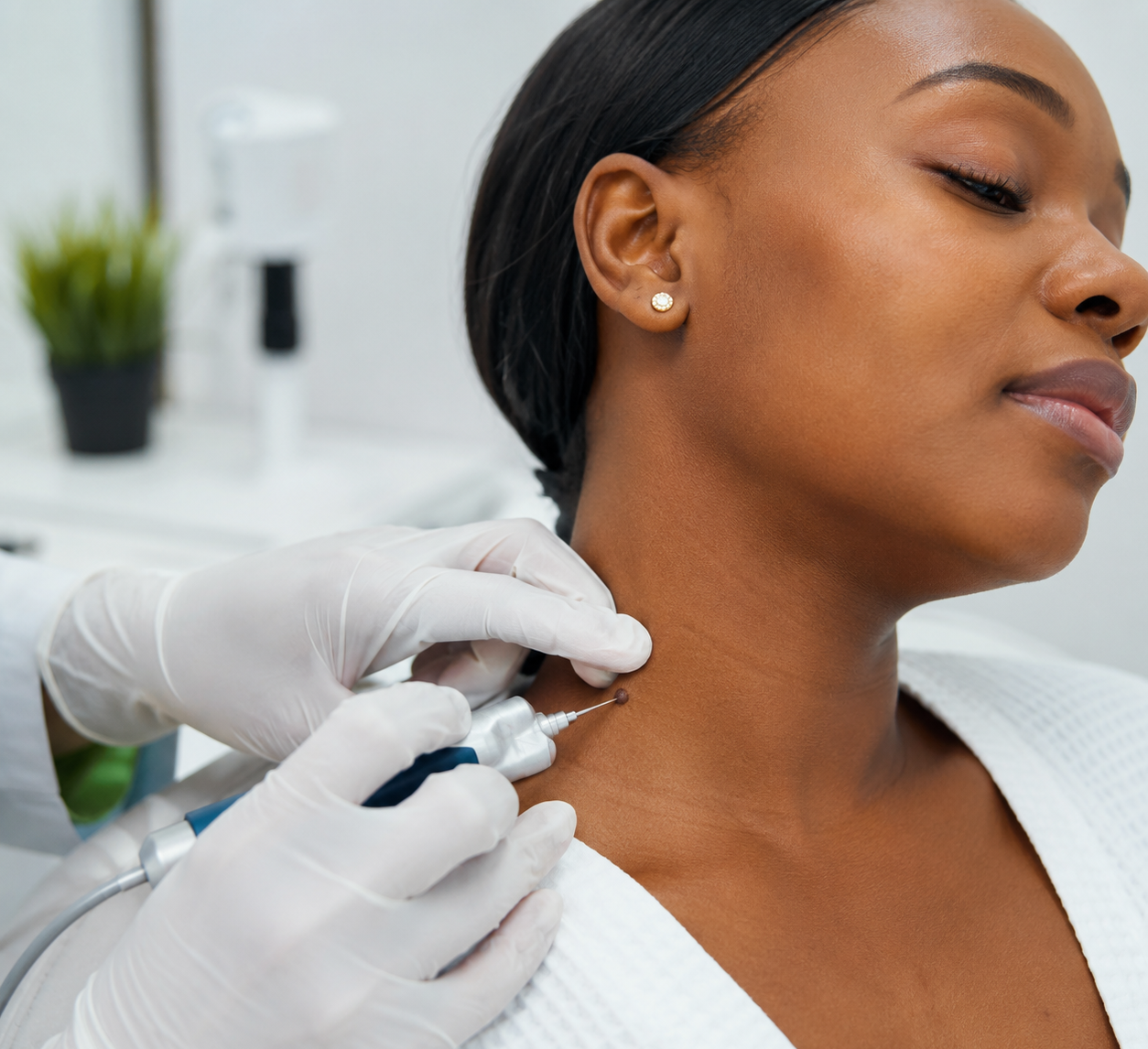
Skin Tag Removal in Lagos
Skin Tag Removal in Lagos: Safe Treatment Options and Aftercare
Skin tags are common, but they can still make people uncomfortable.
They may appear on the neck, face, eyelids, underarms, chest, groin area or any part of the body where skin rubs against skin or clothing.
Some people remove skin tags because they catch on jewellery or clothing. Others remove them because they do not like how they look.
If you are searching for skin tag removal in Lagos, the most important thing is safety.
Not every small growth on the skin is a skin tag. Some growths may look similar but require medical assessment.
This guide explains what skin tags are, why they appear, safe removal options, what to expect during treatment and how to care for your skin after removal.
What Are Skin Tags?
Skin tags are small, soft growths that hang from the skin.
They are usually harmless and non-cancerous.
A skin tag may look like:
- A tiny soft bump
- A small flap of skin
- A hanging piece of skin
- A smooth or wrinkled growth
- Skin-coloured, brown or darker than the surrounding skin
Skin tags may be very small or grow larger over time.
They are often attached to the skin by a small stalk.
Where Do Skin Tags Usually Appear?
Skin tags commonly appear in areas where the skin folds or rubs.
These areas include:
- Neck
- Underarms
- Eyelids
- Chest
- Under the breasts
- Groin area
- Inner thighs
- Stomach folds
- Back
- Around jewellery or clothing friction points
They can appear as one tag or as several tags in the same area.
What Causes Skin Tags?
The exact cause is not always clear.
However, skin tags are often linked to friction and skin folds.
They may be more common in people who:
- Have areas where skin rubs together
- Wear jewellery that rubs the skin
- Experience weight changes
- Are pregnant
- Have a family history of skin tags
- Have insulin resistance or diabetes
- Are older adults
Skin tags can happen to both men and women.
They are not caused by being dirty, and they are not something to be ashamed of.
Are Skin Tags Dangerous?
Most skin tags are harmless.
They usually do not need treatment unless they bother you.
However, you should not automatically assume every growth is a skin tag.
Some warts, moles and other skin growths may look similar to skin tags.
You should get the growth checked if it:
- Bleeds easily
- Changes colour
- Grows quickly
- Becomes painful
- Has an irregular shape
- Develops a sore
- Looks very different from your other marks
- Appears suddenly in large numbers
- Becomes itchy, swollen or infected
- Has mixed colours
- Is dark and changing
- Keeps returning after removal
If a growth looks suspicious, it should be assessed by a qualified healthcare professional before removal.
Can You Remove Skin Tags at Home?
It is not advisable to remove skin tags at home.
Some people try to cut, burn, tie or scratch them off.
Others use online creams, patches, acids or DIY kits.
These methods can be risky.
At-home removal may cause:
- Bleeding
- Burns
- Infection
- Scarring
- Dark patches
- Light patches
- Pain
- Skin damage
- Poor healing
- Delayed diagnosis if the growth is not actually a skin tag
This is especially important for dark skin because injury and irritation can lead to post-inflammatory hyperpigmentation.
A small skin tag can become a bigger skin problem if it is removed wrongly.
Why Professional Assessment Matters
Before removing a skin tag, a professional should confirm that it is actually a skin tag.
Assessment helps determine:
- Whether the growth is harmless
- Whether it may be a wart, mole or another skin condition
- Which removal method is safest
- Whether the area is sensitive
- Whether there is risk of scarring
- Whether the skin has signs of infection
- Whether medical review is needed
- The best aftercare plan
This is why safe skin tag removal should begin with a consultation, not immediate cutting.
Safe Skin Tag Removal Options
There are different professional methods for removing skin tags.
The best option depends on the size, number, location and appearance of the skin tags.
1. Cautery
Cautery uses controlled heat to remove the skin tag or seal the area.
It may be used for small skin tags and can help reduce bleeding.
The treated area may form a small scab before healing.
Cautery should be performed carefully to reduce the risk of burns, scarring or pigmentation changes.
2. Cryotherapy
Cryotherapy uses very cold temperature to freeze the skin tag.
After treatment, the skin tag may shrink, dry up and fall off over time.
Cryotherapy may be suitable for some skin tags, but it must be used carefully on dark skin because it can sometimes cause light or dark patches.
3. Snip or shave removal
A professional may remove a skin tag by cutting it at the base using sterile medical tools.
This is usually quick and may be suitable for tags with a clear stalk.
The area may be cleaned, numbed when needed and treated to reduce bleeding.
Do not try this at home with scissors, blades or nail cutters.
4. Laser removal
Laser may be used in some clinics to remove or reduce selected skin growths.
Laser treatment uses focused energy and may be useful when precision is needed.
However, the skin must be assessed first, especially on dark skin, because incorrect settings may cause burns or pigmentation changes.
Which Skin Tag Removal Method Is Best?
There is no single best method for everyone.
The right method depends on:
- Size of the skin tag
- Number of skin tags
- Location
- Skin tone
- Pain sensitivity
- Bleeding risk
- History of keloids
- Whether the growth looks typical
- Whether the area is delicate
- Whether a sample needs medical testing
A skin tag on the neck may not be treated the same way as one near the eye or groin.
The safest option is the one selected after assessment.
Is Skin Tag Removal Painful?
Skin tag removal is usually manageable.
The level of discomfort depends on the method used, the size of the tag and the area being treated.
You may feel:
- A small pinch
- Mild heat
- Temporary stinging
- Slight pressure
- Tenderness after treatment
A numbing product or local anaesthetic may be used for comfort when needed.
Tell the practitioner if you are nervous, sensitive to pain or treating a delicate area.
What Happens During Skin Tag Removal?
A typical appointment may include:
- A consultation and examination of the skin tag.
- Cleaning the treatment area.
- Choosing the safest removal method.
- Applying numbing when needed.
- Removing or treating the skin tag.
- Controlling any minor bleeding.
- Applying soothing product or dressing.
- Giving aftercare instructions.
The procedure may be quick, especially for small skin tags.
If you have many skin tags, the appointment may take longer or require more than one session.
What Happens After Skin Tag Removal?
After removal, the treated spot may look slightly red, tender or darker for a short period.
Depending on the method used, the area may form:
- A small scab
- Mild swelling
- Temporary redness
- Slight tenderness
- A small healing mark
This is usually part of the healing process.
Do not pick the scab.
Picking can delay healing and increase the risk of scarring or dark marks.
Skin Tag Removal Aftercare
Aftercare depends on the removal method and location.
Your practitioner may advise you to:
- Keep the area clean
- Keep the area dry for the period advised
- Avoid scratching or picking
- Use only recommended products
- Cover the area if clothing rubs against it
- Avoid harsh skincare products on the area
- Avoid shaving over the healing spot
- Avoid swimming until healed
- Avoid heat or friction if the area is sensitive
- Protect exposed areas from sunlight
- Return for review if healing looks unusual
Follow the exact instructions given by the clinic.
Do not apply random creams, herbs or bleaching products to the healing area.
How Long Does Healing Take?
Healing time depends on the method used, the size of the skin tag and your skin’s response.
Small treated areas may heal within days.
Larger or irritated areas may take longer.
A small scab may form and fall away naturally.
For dark skin, any temporary darkening may take longer to fade than the surface wound takes to heal.
If the area becomes more painful, swollen, hot, wet, smelly or starts producing pus, contact the clinic.
Can Skin Tag Removal Leave a Scar?
Yes, any skin procedure can leave a mark or scar.
The risk may depend on:
- Size of the skin tag
- Removal method
- Skin tone
- Location
- Aftercare
- Picking or scratching
- Infection
- Keloid tendency
- Practitioner technique
Dark or brown skin may also develop temporary or lasting pigmentation changes after irritation.
A professional approach and proper aftercare reduce the risk.
Can Skin Tags Come Back After Removal?
A removed skin tag usually does not grow back in the exact same place.
However, new skin tags may appear in nearby areas or other parts of the body.
This can happen if the factors that caused them continue, such as friction, skin folds, hormonal changes or genetic tendency.
Removal treats the existing tag. It does not stop your body from ever forming new ones.
Can Skin Tags Spread?
Skin tags are not usually contagious.
They do not spread from person to person like an infection.
However, some people develop several skin tags over time, especially in areas where the skin rubs.
If you suddenly develop many growths, it is wise to have them assessed.
Skin Tag vs Wart: What Is the Difference?
Skin tags and warts can sometimes look similar, but they are different.
Skin tags are usually soft and often hang from a small stalk.
Warts may feel rougher and are caused by a virus.
Warts may spread to other areas or other people through contact.
Treatment may differ.
This is another reason proper assessment matters before removal.
Skin Tag vs Mole: What Is the Difference?
A mole is a different type of skin growth.
Moles may be flat or raised and are often brown or black.
Some moles are harmless, but a changing mole needs medical attention.
Do not remove a mole at home or assume it is a skin tag.
A mole that changes in size, shape or colour should be checked by a qualified medical professional.
Skin Tags on the Neck
The neck is one of the most common places for skin tags.
They may be irritated by:
- Chains
- Collars
- Perfume
- Sweat
- Friction
- Shaving
- Skincare products
Neck skin tags can often be removed professionally, but the method should be chosen carefully to reduce the risk of visible marks.
Aftercare and sun protection are important if the area is exposed.
Skin Tags on the Eyelid
Eyelid skin tags should be treated with extra care.
The skin around the eye is thin and delicate.
Do not use home creams, acids, patches or scissors near the eye.
A professional should assess eyelid skin tags and decide whether removal is suitable.
The eyes must be protected during treatment.
Skin Tags Under the Arm
Underarm skin tags may become irritated because of shaving, deodorant, sweating or clothing friction.
After removal, you may be advised to avoid deodorant or shaving over the area for a short period while it heals.
Do not apply strong deodorant, perfume or bleaching products to the treated area unless your practitioner says it is safe.
Skin Tags Around the Groin or Inner Thighs
Skin tags in the groin or inner thigh area may be irritated by friction, sweat and tight clothing.
Professional treatment should be done respectfully and with clear consent.
You may be advised to wear loose clothing after removal to reduce rubbing during healing.
Avoid shaving, waxing or applying harsh products until the area has healed.
Skin Tag Removal for Men and Women
Skin tags affect both men and women.
Men may notice them around the neck, underarms, chest or beard area.
Women may notice them on the neck, underarms, chest, under the breasts, stomach folds or inner thighs.
Treatment choice should depend on the location, skin type and safety assessment, not gender.
How Much Does Skin Tag Removal Cost in Lagos?
The cost of skin tag removal in Lagos depends on:
- Number of skin tags
- Size of the skin tags
- Location
- Removal method
- Whether numbing is needed
- Whether more than one session is required
- Whether the growth needs medical review
- Clinic experience and equipment
A small single skin tag may cost less than several skin tags in different areas.
A consultation may be needed before an accurate price can be given.
Avoid choosing removal only because it is cheap.
Poor removal can cause scarring, infection or pigmentation that may cost more to correct.
How to Prepare for Skin Tag Removal
Before your appointment, you may be advised to:
- Avoid picking or scratching the skin tag
- Avoid applying harsh products to the area
- Tell the clinic about your medical history
- Mention diabetes, keloids or bleeding problems
- Share medicines and supplements you take
- Tell the practitioner if you are pregnant or breastfeeding
- Avoid treating infected or irritated skin
- Ask what aftercare will be needed
- Wear clothing that does not rub the area
Do not apply home-removal products before your appointment.
They may irritate the skin and make professional assessment harder.
What to Avoid After Skin Tag Removal
After removal, avoid:
- Picking the scab
- Scratching the area
- Applying bleaching creams
- Using acids or exfoliants on the spot
- Shaving over the area too soon
- Wearing tight clothing that rubs
- Swimming before the area heals
- Using perfume or deodorant on fresh underarm wounds
- Exposing the area to direct sunlight
- Ignoring signs of infection
Healing skin needs gentle care.
When Should You Contact the Clinic?
Contact the clinic if you notice:
- Increasing pain
- Worsening swelling
- Pus
- Bad smell
- Fever
- Spreading redness
- Bleeding that does not stop
- Severe itching
- A wound that is not healing
- A raised scar developing
- The growth returning quickly
- New colour changes that worry you
Do not wait too long if the area looks infected or unusual.
How to Choose a Skin Tag Removal Clinic in Lagos
Before booking skin tag removal, look for a clinic that offers:
Proper assessment
The clinic should confirm that the growth is likely a skin tag before removing it.
Safe removal options
Different methods should be available or explained clearly.
Experience with dark skin
The practitioner should understand pigmentation risks and healing on Black and brown skin.
Clean treatment environment
Tools, gloves and treatment areas should be hygienic.
Clear aftercare
You should know exactly how to care for the area after removal.
Honest expectations
The clinic should explain possible marks, scarring and pigmentation changes.
Professional boundaries
Treatment of private or sensitive areas should be done respectfully, with consent and privacy.
Follow-up support
You should know who to contact if healing does not look normal.
Skin Tag Removal in Lekki, Lagos
For people looking for skin tag removal in Lekki, Vitality Aesthetics & Spa offers professional skin tag and keloid care as part of its aesthetic treatment services.
The clinic focuses on assessment, safe treatment planning and personalised care for unwanted skin growths.
Before removal, clients can discuss:
- Whether the growth is likely a skin tag
- The safest removal method
- Possible side effects
- Pain control
- Healing time
- Aftercare
- Cost
- Whether a medical review is needed
- How to reduce the risk of marks or irritation
Vitality also provides other skin and aesthetic treatments, including chemical peels, laser services, microneedling, PRP, CO₂ laser resurfacing and skin rejuvenation.
This allows clients to receive guidance based on their full skin condition instead of treating one concern in isolation.
Add internal links here to Vitality’s:
- Aesthetic Treatments page
- Services page
- Safe Aesthetic Clinic in Lagos blog post
- Contact Us page
- Our Results page
Frequently Asked Questions
How much is skin tag removal in Lagos?
The cost depends on the number, size, location and removal method. A consultation may be needed before an accurate price is given.
Is skin tag removal painful?
Discomfort is usually mild and manageable. Numbing may be used when needed, especially for sensitive areas.
Can I cut off a skin tag myself?
No. Cutting a skin tag at home can cause bleeding, infection, scarring and dark marks. It may also delay proper diagnosis if the growth is not a skin tag.
What is the safest way to remove skin tags?
The safest method is professional removal after assessment. Options may include cautery, cryotherapy, snip removal or laser, depending on the skin tag.
Do skin tags grow back after removal?
A removed skin tag usually does not return in the same spot, but new ones may appear in other areas.
Can skin tag removal leave dark marks?
Yes. Dark or brown skin may develop temporary or lasting pigmentation after irritation. Proper technique and aftercare help reduce the risk.
Are skin tags contagious?
Skin tags are not usually contagious. They do not spread from person to person like an infection.
Can skin tags be removed from the eyelid?
Yes, but eyelid skin tags need careful professional assessment because the area is delicate.
When should I worry about a skin growth?
Seek professional advice if it changes colour, grows quickly, bleeds, hurts, has irregular edges, develops a sore or looks different from your other skin marks.
Where can I get skin tag removal in Lekki?
Vitality Aesthetics & Spa is located at:
20B Rahman Adeboyejo Street, Lekki, Lagos, Nigeria
For enquiries and appointments:
+234 703 003 5044
+234 818 501 5086
Final Thoughts
Skin tags are usually harmless, but removal should still be handled carefully.
The safest approach is to first confirm that the growth is truly a skin tag, then choose the right professional removal method.
Avoid cutting, burning, tying or applying online skin tag removers at home.
These methods can cause bleeding, infection, burns, scars and dark marks, especially on Black and brown skin.
A proper consultation helps protect your skin and gives you a cleaner, safer result.
The goal is not just to remove the skin tag. The goal is to remove it safely and help the skin heal well.