
Tattoo Removal in Lagos
Tattoo Removal in Lagos: Cost, Sessions and What to Expect
Tattoos can feel meaningful when you first get them.
But life changes.
A name may no longer matter. A design may no longer match your style. A tattoo may fade badly, look unprofessional, or simply become something you no longer want on your body.
This is why many people now search for tattoo removal in Lagos.
Laser tattoo removal is one of the most common professional ways to fade or remove unwanted tattoos. It works by breaking tattoo ink into smaller particles so the body can gradually clear them.
However, tattoo removal is not instant.
It usually requires multiple sessions, proper spacing, realistic expectations and careful aftercare.
This guide explains how laser tattoo removal works, how much it may cost in Lagos, how many sessions you may need and what to expect before starting treatment.
What Is Laser Tattoo Removal?
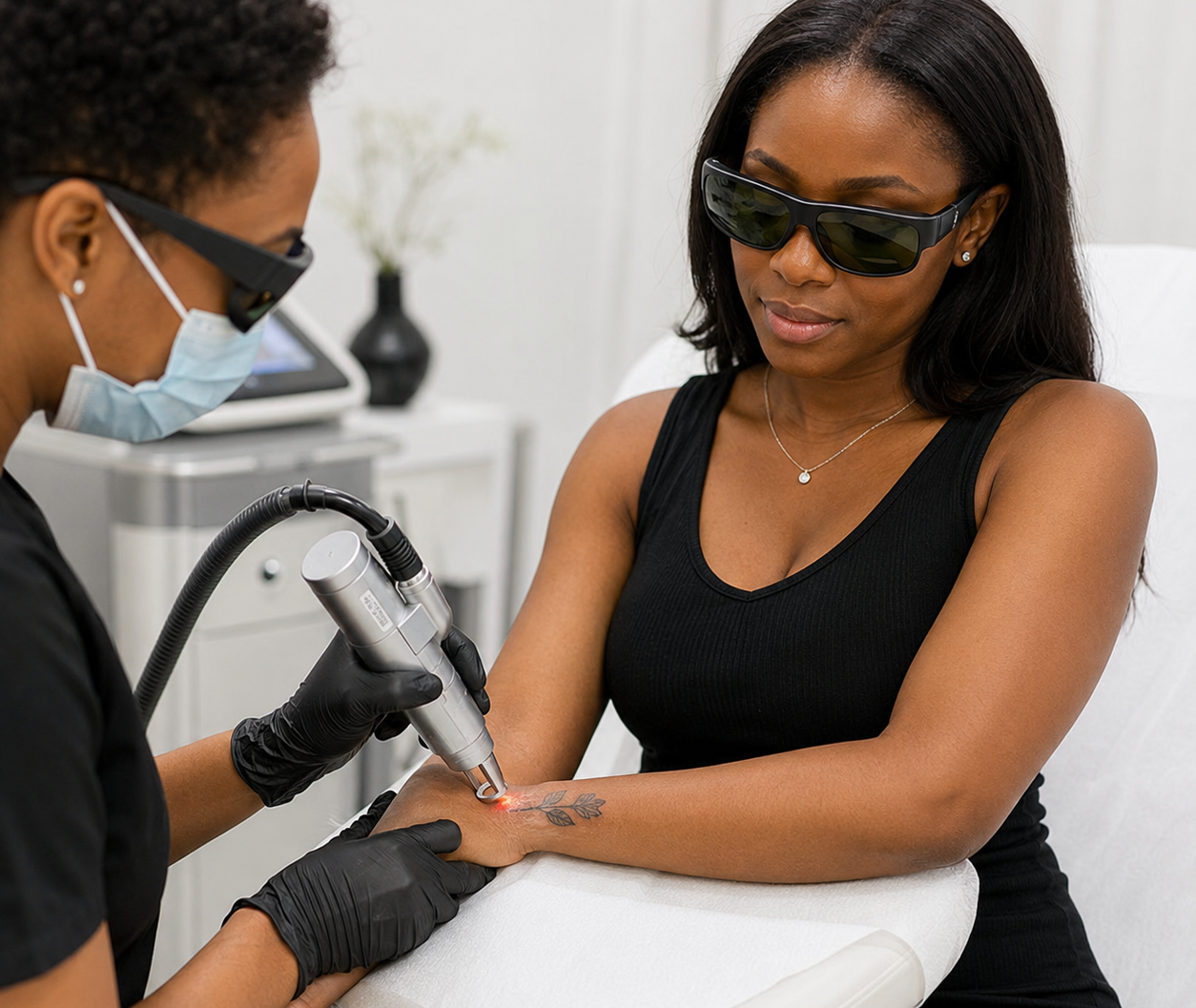
Laser tattoo removal is a professional treatment that uses targeted laser energy to break down tattoo pigment in the skin.
When you get a tattoo, ink is placed beneath the surface of the skin. This is why tattoos can last for many years.
During laser removal, the laser energy is attracted to the tattoo pigment. The energy breaks the ink into smaller particles. Over time, the body’s immune system helps clear those particles naturally.
The tattoo may then become lighter after each session.
Laser tattoo removal does not pull the ink out in one appointment. It works gradually.
Can Tattoos Be Removed Completely?
Some tattoos can fade very well.
Some may become almost invisible.
Others may only lighten.
Complete removal is not always possible.
The result depends on many factors, including:
- Tattoo size
- Tattoo colour
- Ink depth
- Ink quality
- Age of the tattoo
- Skin tone
- Location on the body
- Your immune response
- The laser technology used
- Number of sessions completed
- Aftercare
A professional clinic should not promise 100% removal for every tattoo.
The safer promise is improvement, fading and a realistic treatment plan.
Why Tattoo Removal Needs More Than One Session
A tattoo contains layers of ink.
The laser cannot safely break all the ink layers in one treatment.
Trying to remove everything at once may damage the skin and increase the risk of burns, scarring or pigmentation changes.
Your body also needs time to clear the shattered ink particles after each session.
This is why laser tattoo removal requires patience.
After each treatment, the tattoo should gradually look lighter, but the process can take months.
How Many Sessions Will Tattoo Removal Take?
The number of sessions depends on the tattoo.
Some tattoos may need a few sessions.
Others may require many sessions over several months.
Your session number may depend on:
- Tattoo size
- Tattoo colour
- Whether it is professional or amateur
- How deep the ink was placed
- How old the tattoo is
- Where it is located
- Your skin tone
- Your body’s healing response
- Whether the tattoo has been treated before
- Whether you complete your appointments consistently
Black and dark blue inks are usually easier to treat than colours like green, red and yellow.
Multi-coloured tattoos may need more sessions because different colours respond to different laser wavelengths.
Why Tattoo Colour Matters
Tattoo colour affects how well the laser can target the ink.
Dark colours usually absorb laser energy more easily.
Black ink is often the easiest to fade.
Dark blue may also respond well.
Other colours can be more difficult.
Green, red, yellow, white, flesh-coloured ink and some permanent makeup pigments may be harder to remove.
White ink and some flesh-coloured pigments can sometimes darken after laser exposure because the pigment may oxidise.
This is one reason consultation is important before treatment.
The practitioner needs to examine the colours and decide whether laser removal is suitable.
Is Tattoo Removal Safe for Dark Skin?
Laser tattoo removal can be performed on dark skin, but it must be done carefully.
Dark African skin contains more melanin.
Melanin is the pigment that gives the skin its colour. Since laser energy can also interact with pigment in the skin, the wrong settings may increase the risk of:
- Burns
- Dark patches
- Light patches
- Uneven colour
- Scarring
- Texture changes
This does not mean people with dark skin cannot remove tattoos.
It means the laser type, treatment settings and aftercare must be selected carefully.
Before treatment, ask the clinic:
- Is this laser suitable for my skin tone?
- Have you treated dark skin before?
- What are the risks of dark or light patches?
- Will you start with conservative settings?
- How should I protect the area after treatment?
- How many sessions may be realistic for my tattoo?
A safe clinic should answer these questions clearly.
Who May Be Suitable for Laser Tattoo Removal?
Laser tattoo removal may be suitable for people who:
- Want to fade or remove an unwanted tattoo
- Have realistic expectations
- Can commit to multiple sessions
- Are willing to follow aftercare instructions
- Have healthy skin around the tattoo
- Understand that full removal is not guaranteed
Some people also use laser tattoo removal to fade an old tattoo before getting a cover-up tattoo.
In that case, the goal may not be complete removal. It may simply be to lighten the old design enough for a better cover-up.
Who May Not Be Suitable for Tattoo Removal?
Laser tattoo removal may not be suitable for everyone.
You should tell the practitioner if you:
- Are pregnant
- Are breastfeeding
- Have an active skin infection
- Have an open wound near the tattoo
- Have a history of keloids
- Have uncontrolled diabetes
- Have immune system problems
- Take medicines that increase light sensitivity
- Recently had sunburn on the area
- Have recently used strong exfoliants on the area
- Have a serious medical condition
- Have permanent makeup or cosmetic tattoo pigment
The clinic should review your health before treatment.
Do not hide medical information because you want to start quickly.
What Happens During a Tattoo Removal Consultation?
A consultation helps the practitioner understand your tattoo and your skin.
The practitioner may check:
- Tattoo size
- Tattoo colour
- Tattoo location
- Ink depth
- Skin tone
- Scarring around the tattoo
- Your medical history
- Medicines you use
- History of keloids
- Previous tattoo removal attempts
- Your expected result
- Your budget and timeline
You should also be told:
- Whether the tattoo is suitable for laser treatment
- How many sessions may be needed
- Possible risks
- Expected pain level
- Aftercare
- Cost
- Whether complete removal is realistic
A consultation protects you from unrealistic promises.
What Happens During a Laser Tattoo Removal Session?
The treatment area is usually cleaned first.
You may be given protective eyewear.
A cooling method or numbing cream may be used to reduce discomfort.
The practitioner will pass the laser over the tattoo. You may hear small snapping sounds as the laser interacts with the ink.
The area may turn white or frosty for a short time. This is a common immediate reaction after the laser hits the pigment.
After treatment, the area may be covered with a dressing or soothing product.
You should receive clear aftercare instructions before leaving.
Does Tattoo Removal Hurt?
Laser tattoo removal can be uncomfortable.
Many people describe the feeling as similar to a rubber band snapping against the skin.
Some areas may feel more sensitive than others.
Pain level may depend on:
- Tattoo location
- Tattoo size
- Skin sensitivity
- Laser settings
- Your pain tolerance
- Whether numbing is used
A small tattoo may take only a short time, while a larger tattoo may require a longer session.
If you are worried about pain, discuss numbing options during consultation.
What Happens After Tattoo Removal?
After treatment, the skin may look and feel irritated.
Common temporary reactions include:
- Redness
- Swelling
- Warmth
- Tenderness
- Blistering
- Pinpoint bleeding
- Mild soreness
- Itching
- Crusting
These reactions do not always mean something is wrong.
However, the skin must be cared for properly while it heals.
Do not scratch, pick or peel the treated area.
Tattoo Removal Aftercare
Aftercare is very important.
Your practitioner may advise you to:
- Keep the area clean
- Use recommended healing products
- Cover the area when instructed
- Avoid scratching or picking
- Avoid tight clothing that rubs the area
- Avoid swimming until healed
- Avoid saunas and steam rooms
- Avoid intense exercise if it irritates the area
- Avoid direct sunlight
- Use sun protection when the skin is healed
- Attend your follow-up sessions as scheduled
Poor aftercare can increase the risk of scarring, infection and pigmentation changes.
Follow the instructions given by the clinic.
Why Sun Protection Matters After Tattoo Removal
Sun protection is very important after laser tattoo removal.
Freshly treated skin is more sensitive.
Sun exposure can increase the risk of:
- Dark marks
- Light patches
- Delayed healing
- Irritation
- Uneven skin colour
For dark skin, this is especially important because irritation can trigger pigmentation changes.
Keep the treated area covered from direct sunlight while it heals.
When the skin has fully closed and your practitioner allows it, use suitable sunscreen on exposed areas.
How Long Should You Wait Between Sessions?
Sessions are usually spaced several weeks apart.
The skin needs time to heal before another laser treatment.
The body also needs time to clear the ink particles broken down during the previous session.
Doing sessions too close together may increase the risk of skin damage without improving results faster.
Your practitioner should recommend the best spacing based on your tattoo, skin tone and healing response.
When Will You See Results?
Some fading may be visible after the first session.
However, the tattoo usually fades gradually over time.
You may notice:
- The tattoo becomes less sharp
- Black ink becomes lighter
- Some parts fade faster than others
- Colours respond differently
- The tattoo looks patchy during the process
This is normal.
Tattoo removal is a journey, not a one-day result.
Your before-and-after photos can help track improvement.
Why Some Tattoos Are Harder to Remove
Some tattoos take longer to remove because of:
- Deep ink placement
- Large tattoo size
- Bright colours
- Dense shading
- Multiple cover-up layers
- Old scarring
- Poor-quality ink
- Professional tattooing technique
- Tattoo location on the body
- Slow immune response
Cover-up tattoos may be more difficult because they often contain more ink layers.
Permanent makeup can also be more complicated because some pigments may darken when treated.
Can Tattoo Removal Leave a Scar?
Scarring is possible, but it is less likely when treatment is performed correctly and aftercare is followed.
The risk may increase if:
- The laser settings are too aggressive
- The tattoo was already scarred
- The skin is picked during healing
- An infection develops
- The area is exposed to sunlight
- The person has a keloid tendency
- The provider lacks proper training
If you already have raised scarring inside the tattoo, mention it during consultation.
Can Tattoo Removal Cause Dark or Light Patches?
Yes.
Laser tattoo removal can sometimes cause temporary or lasting colour changes in the treated skin.
On dark skin, the area may become:
- Darker than the surrounding skin
- Lighter than the surrounding skin
- Uneven in colour
Some colour changes may improve with time, but not always.
This is why the clinic must assess your skin and choose safe settings.
Can Tattoo Removal Creams Work?
Be careful with tattoo removal creams, ointments and DIY kits.
Tattoo ink sits deep in the skin.
Creams usually cannot reach the tattoo pigment properly.
Some products contain strong acids, bleaching agents or harsh peeling ingredients that may burn the skin, cause rashes or leave scars.
Trying to remove a tattoo at home can create a worse problem than the tattoo itself.
Professional laser removal is safer than applying unknown products to the skin.
Laser Tattoo Removal vs Cover-Up Tattoo
Some people do not want complete tattoo removal.
They only want to fade the old tattoo enough to cover it with a new one.
Laser fading before a cover-up may help:
- Reduce the darkness of the old tattoo
- Make the new design cleaner
- Give the tattoo artist more options
- Reduce the need for a very dark cover-up
If your goal is a cover-up, say this during consultation.
The treatment plan may be different from someone who wants full removal.
How Much Does Tattoo Removal Cost in Lagos?
The cost of tattoo removal in Lagos depends on several factors.
These include:
- Tattoo size
- Tattoo colour
- Tattoo location
- Ink depth
- Number of sessions needed
- Laser technology used
- Skin tone and safety planning
- Practitioner experience
- Whether the goal is fading or full removal
A small black tattoo will usually cost less than a large, multi-coloured tattoo.
A consultation is often needed before an accurate price can be given.
Avoid choosing tattoo removal only because it is cheap.
Unsafe laser treatment can lead to burns, scars and skin colour changes that may be harder to correct.
Why Tattoo Removal Price Is Not Only About Size
Size matters, but it is not the only factor.
Two tattoos may look similar in size but require different treatment plans.
For example:
- A black tattoo may respond faster than a green tattoo.
- An old faded tattoo may respond differently from a fresh dense tattoo.
- A tattoo on one body area may clear faster than another.
- A cover-up tattoo may contain several ink layers.
- Dark skin may require more careful settings and spacing.
This is why proper assessment matters.
Can Fresh Tattoos Be Removed Immediately?
It is usually better to wait until a new tattoo has healed before considering removal.
Fresh tattoos are still healing wounds.
Treating them too early may increase the risk of irritation, poor healing or scarring.
If you recently got a tattoo and regret it, speak to a professional before doing anything.
Do not apply harsh products or try to scrub the tattoo away.
Can Permanent Makeup Be Removed?
Permanent makeup is a type of tattoo.
This may include:
- Eyebrow tattooing
- Lip liner
- Eyeliner
- Cosmetic pigment
Permanent makeup can be more complicated to treat because the pigment may react differently to laser.
Some flesh-coloured or white pigments may darken when exposed to laser.
The face is also a sensitive area.
Permanent makeup removal should only be assessed by someone experienced with cosmetic tattoo pigments.
What Should You Avoid Before Tattoo Removal?
Before treatment, you may be advised to avoid:
- Sunburn on the area
- Tanning
- Harsh scrubs
- Chemical peels on the area
- Waxing over the tattoo
- Picking or scratching the tattoo
- Applying strong bleaching products
- Treatment over infected or irritated skin
- Hiding medical history from the clinic
The skin should be healthy before laser treatment begins.
What Should You Avoid After Tattoo Removal?
After treatment, avoid:
- Picking blisters or scabs
- Scratching the area
- Swimming until healed
- Exposing the area to direct sunlight
- Applying harsh products
- Wearing tight clothing that rubs
- Using unapproved creams
- Missing aftercare instructions
- Booking another session too soon
Let the skin heal properly.
Tattoo removal works best when the skin is protected throughout the process.
How to Choose a Tattoo Removal Clinic in Lagos
Before booking laser tattoo removal, look for a clinic that offers:
A proper consultation
The tattoo, skin tone and medical history should be assessed before treatment.
Experience with dark skin
The provider should understand how to reduce pigmentation risks on African skin.
Suitable laser technology
Different ink colours may need different laser wavelengths. One laser may not treat every colour effectively.
Honest expectations
The clinic should explain that complete removal is not always possible.
Clear pricing
You should understand how pricing is calculated and whether multiple sessions will be required.
Good aftercare
You should receive clear instructions for healing.
Professional hygiene
Laser treatment should be done in a clean environment with proper skin preparation and protective eyewear.
Follow-up support
You should know who to contact if the area reacts unexpectedly.
Tattoo Removal in Lekki, Lagos
For people searching for tattoo removal in Lekki, Vitality Aesthetics & Spa offers laser tattoo removal as part of its aesthetic treatment services.
Vitality’s approach focuses on professional assessment, safe treatment planning and personalised care.
Before treatment, the tattoo and surrounding skin should be assessed to understand:
- Tattoo colour
- Tattoo size
- Ink depth
- Skin tone
- Risk of pigmentation
- Expected number of sessions
- Whether fading or full removal is the goal
- Possible side effects
- Aftercare
- Cost
The clinic also provides other non-surgical aesthetic and skin treatments, including laser services, skin rejuvenation, chemical peels, microneedling, CO₂ laser resurfacing and body treatments.
This makes it easier for clients to receive guidance based on their full skin condition, not just the tattoo alone.
Add internal links here to Vitality’s:
- Aesthetic Treatments page
- Services page
- Our Results page
- Contact Us page
- Safe Aesthetic Clinic in Lagos blog post
Frequently Asked Questions
How much does tattoo removal cost in Lagos?
The cost depends on tattoo size, colour, ink depth, number of sessions and laser technology used. A consultation is usually needed for an accurate price.
How many sessions do I need to remove a tattoo?
Most tattoos need multiple sessions. The exact number depends on colour, size, location, ink depth, skin tone and how your body clears the ink.
Can one session remove a tattoo?
Usually, no. Tattoo ink sits in layers, and the body needs time to clear the broken ink particles after each laser session.
Is laser tattoo removal painful?
It can feel uncomfortable, like a rubber band snapping against the skin. Numbing may be used to make treatment more comfortable.
Is tattoo removal safe for dark skin?
It can be safe when performed with suitable laser settings by someone experienced with darker skin. Incorrect settings may cause burns or pigmentation changes.
Can tattoo removal leave scars?
Scarring is possible, especially if the treatment is too aggressive, the skin is picked during healing or infection occurs.
Which tattoo colours are hardest to remove?
Green, red, yellow, white, flesh-coloured ink and some permanent makeup pigments may be harder to remove than black or dark blue ink.
Can I remove a tattoo with cream?
Tattoo removal creams and DIY kits are not recommended. They may burn the skin, cause rashes or leave scars, and they usually cannot reach tattoo pigment deep in the skin.
Can laser tattoo removal remove permanent makeup?
Permanent makeup may be treated in some cases, but it needs careful assessment because some pigments can darken after laser exposure.
Where can I get tattoo removal in Lekki?
Vitality Aesthetics & Spa is located at:
20B Rahman Adeboyejo Street, Lekki, Lagos, Nigeria
For enquiries and appointments:
+234 703 003 5044
+234 818 501 5086
Final Thoughts
Tattoo removal is possible, but it is not instant.
Laser treatment works by breaking tattoo ink into smaller particles so the body can gradually clear them.
The number of sessions, cost and results depend on the tattoo colour, size, depth, location, skin tone and your body’s response.
For dark African skin, safety matters. The wrong laser settings may cause burns, scars or uneven pigmentation.
Start with a proper consultation, ask questions and follow your aftercare instructions.
The goal is not just to fade the tattoo. The goal is to protect your skin while getting the best possible result.